
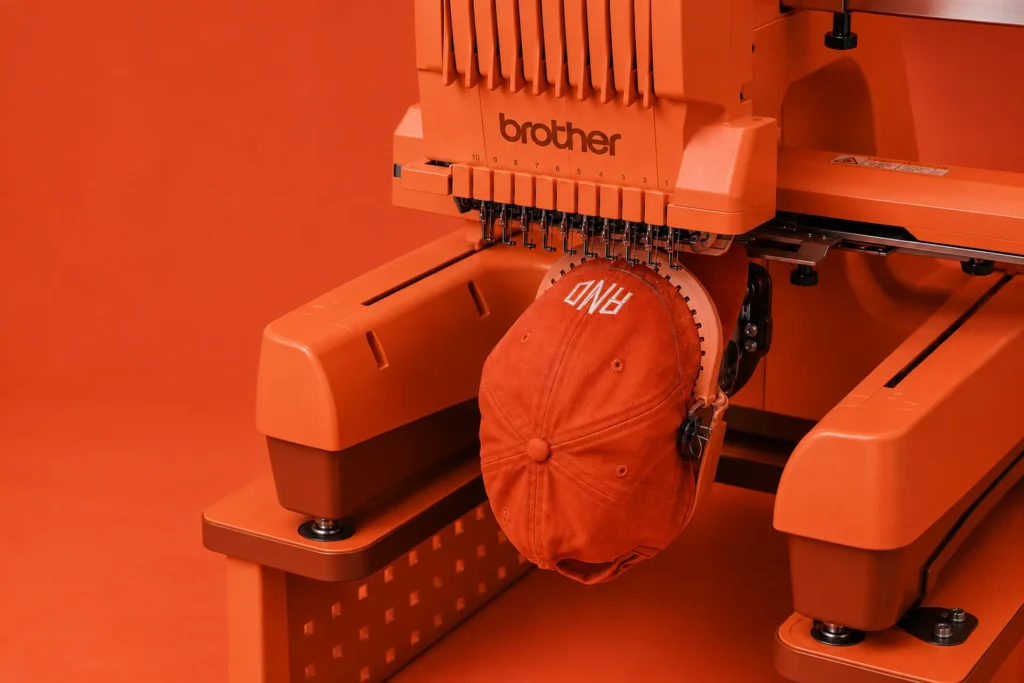
You asked, and the swag experts answered. What’s a stitch count? Why do bobbin changes matter? Why does embroidery take longer than printing? And why can’t we “just make the logo bigger”? Welcome to the stuff behind your stuff, where we explain what actually goes into making custom embroidered swag look, well, elevated.
Today’s topic: embroidery. Those beautifully stitched hats, jackets, polos, bags, and backstage essentials don’t happen with a quick click of the “embroider” button. There are files to prep, machines to set, threads to manage, garments to hoop, bobbins to change, logos to finesse, and finished pieces to inspect.
In other words, it takes what it takes. And there’s a reason for that.
Q: First things first. What is a stitch count?
A stitch count is pretty much what it sounds like: the number of stitches required to embroider your design. A simple logo may require relatively few stitches. A larger, denser, more detailed design can require thousands upon thousands. And every one of those stitches has to happen physically. The machine is fast… but it is not magic. Higher stitch counts generally mean more machine time, more thread, more opportunities for thread or bobbin changes, and more production time. Fine details, filled areas, lettering, outlines, layering, and density all affect how many stitches are required.
Q: So why does embroidery take longer than printing?
Embroidery physically builds the design into the garment. With many print methods, artwork is transferred onto the surface of a product. Embroidery builds the artwork stitch by stitch with thread. Each garment has to be prepared and positioned correctly. The machine then runs the embroidery sequence, potentially changing thread colors along the way. Depending on the design and garment, there may also be backing, trimming, finishing, and quality-control steps.
Printing can be the better choice when speed, extremely fine detail, gradients, or crisp graphic edges are the priority. The real question is: Which decoration method is right for this item, this artwork, this quantity, this deadline, and the finished look you want?
Q: What are bobbins, and why should I care about them?
Ah, the humble bobbin. Tiny. Unassuming. Absolutely capable of affecting your production schedule. Embroidery creates stitches using thread from above and bobbin thread underneath the fabric. The two work together to form and secure the stitch. But bobbins do not contain an infinite supply of thread. Eventually, they run out. When that happens, production has to stop long enough for the bobbin to be changed and the machine to get back to work. One bobbin change? Not exactly headline news. Repeated across a large embroidery run, however, those little interruptions add up. It’s one of those production realities most people never think about. We do. Obsessing over the details nobody else wants to think about is kind of our thing.
Q: Why can’t we “just make the logo bigger”?
Sometimes we can. Sometimes the hat would like a word. Embroidery has physical limitations based on the item being decorated. A baseball cap, for example, has seams, curves, panels, structure, and a finite embroidery area. A logo can’t simply keep growing without running into the limits of where the machine can safely and consistently stitch. There’s also the artwork itself. Making a logo larger can change stitch count, density, production time, and how the design behaves on the material. Going smaller creates its own problems, especially with tiny lettering and intricate details. Our job isn’t simply to make the logo fit; it’s to make the logo look good, and there is a difference.
Q: Why don’t embroidered edges always look exactly like printed edges?
Thread and ink behave differently. Many print methods can reproduce extremely sharp lines and tiny graphic details because the image is applied directly to the product’s surface. Embroidery is creating that image with individual stitches of thread. That creates texture and dimension, which is exactly why embroidery looks so good. But it also means extremely fine points, tiny type, intricate curves, and razor-sharp edges may need to be adjusted to translate properly into thread. This is where digitizing becomes important.
Q: Wait. What is digitizing?
Digitizing is the process of converting your artwork into instructions an embroidery machine can actually follow. A properly digitized embroidery file tells the machine where to stitch, what direction stitches should run, how dense they should be, when colors change, and how different parts of the design should be constructed. Good digitizing can make a logo look fantastic. Bad digitizing can make your beautifully designed brand mark look like it lost a fight with a sewing machine. This is one reason we care so much about seeing the artwork, knowing the product, and understanding the intended result before production begins.
Embroidery vs. Print: Which One Should I Choose?
Choose embroidery when you want:
- Texture and dimension
- A premium, elevated look
- Strong durability
- A classic finish on hats, polos, jackets, bags, and similar pieces
Consider print when you need:
- Very fine detail
- Particularly sharp graphic edges
- Gradients or complex artwork
- Larger decoration areas
- A faster turnaround for certain projects
The Stuff Behind Your Stuff
Great swag looks effortless…but that’s because somebody else handled the effort. At Star Gift Alliance, we know what happens behind the scenes because we’ve spent decades living in the world of tours, events, VIP experiences, deadlines, freight, production schedules, and last-minute requests that begin with the deeply comforting phrase, “Quick question…” “We understand the details so you don’t have to become an embroidery expert overnight. You bring the brand. We’ll worry about the bobbins.